
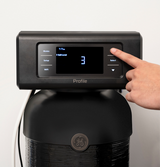
Hard water is a quiet intruder. It doesn’t change the color or smell of water, but it leaves its mark on everything it touches, from shower walls to interior plumbing to your customers’ skin and hair.
Hard water is simply water with a high concentration of dissolved minerals, specifically calcium and magnesium. While these minerals aren’t harmful to internal health, they can leave a residue that causes dryness or buildup on skin and hair. More importantly, these minerals can create scale buildup in plumbing systems that acts like a slow-moving clog in the home.
Given that hard water impacts 85% of U.S. homes according to the U.S. Geological Survey, a GE Profile water softener is a vital home health essential that provides a solid return on investment for homeowners. For distributors and dealers, it represents a high-growth opportunity in the expanding water treatment market.
This guide explores the signs of hard water, how the softening process works, and the benefits of offering water softeners as part of a whole-home water treatment solution. You’ll also see how GE Profile™ water softeners can help you differentiate your portfolio and build long-term customer relationships.
5 COMMON SIGNS A HOME NEEDS A WATER SOFTENER
Before we dive into the science, let’s look at the symptoms. If you notice any of these five signs, a home is likely struggling with hard water.
-
Spotty Dishes and Glassware: Are your customers pulling clean glasses out of the dishwasher only to find them covered in a cloudy, white film? That milky residue isn’t leftover soap — it’s mineral deposits left behind as the water evaporates.
-
Dry, Itchy Skin and Dull Hair: Hard water makes it difficult for soaps and shampoos to lather. Instead of rinsing away, the minerals stay on skin and hair, stripping away natural oils and leaving homeowners feeling itchy or filmy after a shower.
-
Reduced Water Pressure: Scale buildup doesn't just happen on faucets; it happens inside pipes. Over time, mineral deposits narrow the diameter of plumbing, leading to a frustrating drop in water pressure.
-
Faded or Crunchy Laundry: If customers report that their bright clothes look gray after a few washes or that their towels feel stiff and abrasive, the calcium and magnesium are to blame. They bond with fabric fibers, making them brittle and dull.
-
Short-Lived Appliances: This is the most expensive sign. When scale builds up inside a water heater or dishwasher, the heating elements have to work twice as hard to reach the same temperature. This leads to frequent repairs and premature appliance failure. In many homes, this can shorten the life of major water-using appliances.
HOW DO WATER SOFTENERS WORK?
The power of a water softener happens through a process called ion exchange.
-
The Resin Bed: Inside the main tank are thousands of tiny beads called resin. These beads are negatively charged and act like a magnet specifically tuned to attract the positively charged calcium and magnesium minerals in the home’s water.
-
Ion Exchange 101: As hard water enters the tank, the minerals stick to the resin beads. In exchange, the resin releases a tiny, harmless amount of sodium ions into the water. The result? The minerals are trapped in the tank, and the water flowing into the home is soft.
-
The Regeneration Cycle: Eventually, the resin beads become full of minerals and can’t attract any more. This is when the system enters its regeneration cycle. It flushes the resin with a brine (salt) solution to recharge the beads and wash the trapped minerals down the drain.
THE BENEFITS OF WATER SOFTENERS
Investing in a water softener that prevents scale buildup provides cost-saving benefits throughout the home.
-
Water Heater Protection: Improve heater efficiency by reducing scale on heating elements, which helps water heat faster and use less energy.
-
Appliance Longevity: Extend the life of the dishwasher, washing machine and water heater by minimizing internal mineral buildup and wear.
-
Less Cleaning: Homeowners spend less time scrubbing soap scum off shower doors and faucets and more time enjoying their home. Soft water also helps glass, fixtures, and tile look newer for longer, which many homeowners notice immediately.
-
Better-Feeling Water: Soft water helps soaps and shampoos rinse more completely, leaving skin feeling smoother and hair more manageable.
-
Improved Laundry Results: Clothes and linens stay brighter, softer, and more comfortable, even after repeated washing.
WHY DISTRIBUTORS ARE ADDING GE PROFILE WATER SOFTENERS TO THEIR PORTFOLIOS
As homeowners look for cost-conscious ways to run their homes, water softeners are beginning to be viewed as an essential part of a whole-home water treatment system. For distributors in the HVAC and plumbing industries, adding water treatment is a strategic business move.
-
The Whole Home Trend: Modern consumers want a single, trusted provider for their indoor environment. Bundling water treatment with HVAC and plumbing solutions positions you as that one-stop resource.
-
Brand Trust: Carrying GE Appliances Air & Water Solutions products makes selling easier because customers already trust the name.
-
Recurring Revenue: Unlike a one-off furnace repair, water softeners create long-term customer relationships through salt replenishment and annual service cycles.
SOFT WATER AND SMART FEATURES
For those seeking the ultimate in water quality and home protection, the GE Profile™ Professional Smart Valve Water Softener represents the pinnacle of water treatment technology. This system goes beyond basic softening by integrating advanced filtration and smart connectivity.